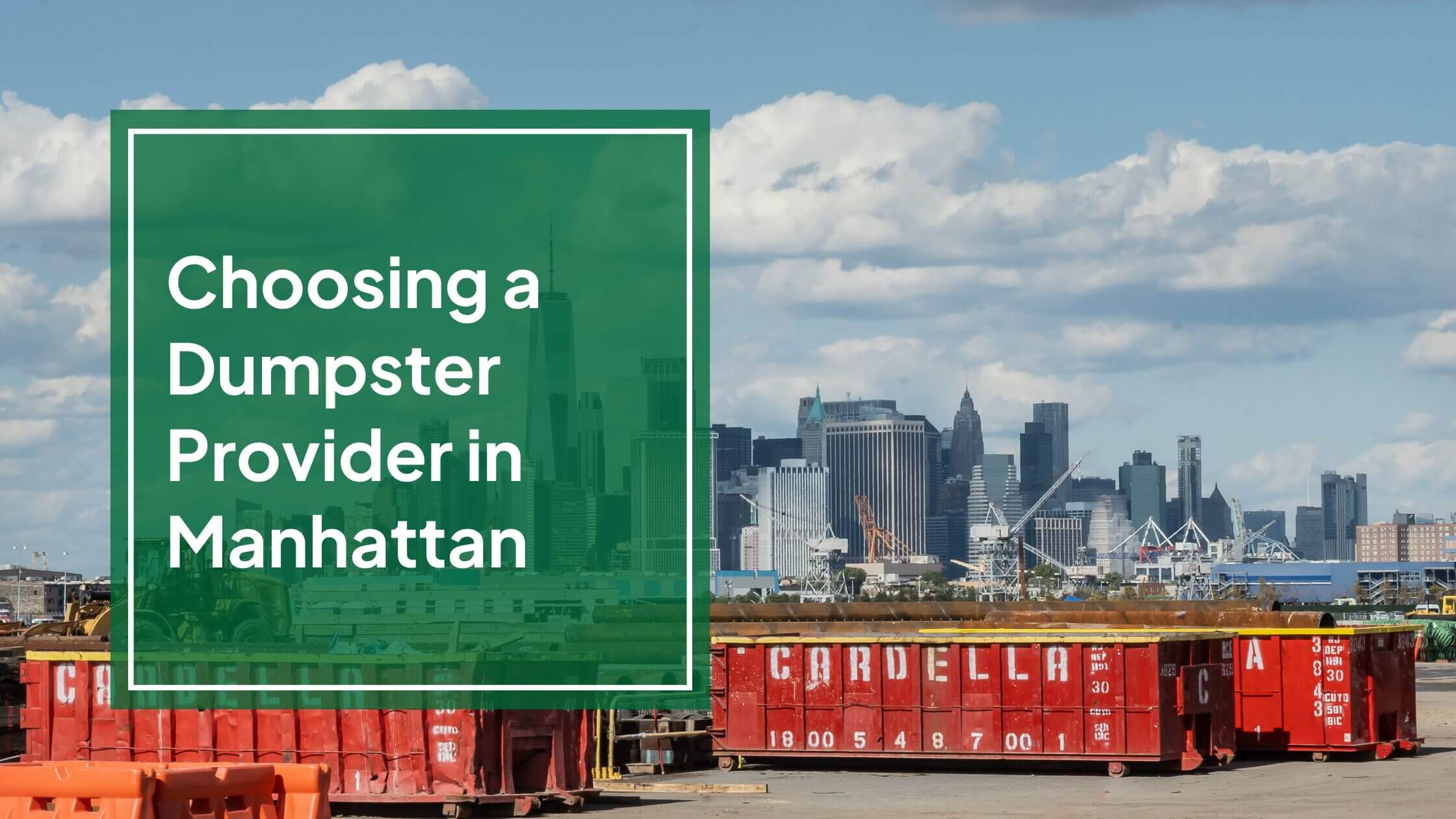
When you’re managing a construction or demolition project in New York or Northern New Jersey, waste management might not be the first thing on your mind, but it should be near the top. One seemingly simple decision can ripple through your entire operation: choosing the right dumpster size.
Get it wrong, and you’re looking at unexpected costs, project delays, and headaches that could’ve been avoided. Get it right, and waste management becomes one less thing to worry about while you focus on keeping your project on schedule and under budget.
The Hidden Costs of Choosing the Right Dumpster Size: Going Too Small
An undersized container might seem like the economical choice upfront, but it rarely works out that way. Here’s what actually happens when your dumpster can’t keep pace with your debris generation:
Multiple hauls mean multiple charges. Every time we need to swap out a full container, you’re paying for another haul. What looked like savings on a smaller rental quickly evaporates when you’re scheduling your third or fourth pickup of the week.
Project delays add up fast. When your container is full and you’re waiting on a swap, where does the debris go? Either your crew stops working in that area, or material starts piling up on-site. Both scenarios cost you time and money. In tight urban spaces, you don’t have the luxury of overflow areas.
Safety and compliance issues emerge. Overfilled containers are a citation waiting to happen. Debris spilling over the sides creates hazards for your crew and the public. In many municipalities, you’ll face fines for overfilled containers that can’t be safely transported. And if you’re working on a project with specific waste management requirements, it can shut you down.
Your site becomes a mess. When the container is full but the work continues, materials end up scattered around the job site. That’s not just unprofessional, it’s a safety hazard. And it slows down work, making a bad impression on clients and inspectors.
The Hidden Costs of Choosing the Right Dumpster Size: The Waste of Going Too Big
On the flip side, oversizing your container comes with its own set of problems:
You’re paying for air. Dumpster pricing is based on both size and weight, and if you’re consistently filling only half of a 30-yard container, you’re paying for more than you need. Over the course of a long project, that adds up to real money left on the table.
Footprint matters in tight spaces. In urban construction environments, every square foot counts. A 30-yard dumpster takes up the same floor space as a 20-yard dumpster. But a 10-yard dumpster can fit in a single parking space, and minis can be wheeled around and serviced quickly by a packer truck.
You might be overloading. If you’re filling a 30-yard container up with heavy materials like concrete and coil, you might be filling it too much for the trucks to safely service! In this case, even if the amount of material is great, you will need a smaller container.
How to Estimate What You Actually Need
Getting the size right starts with understanding your debris volume. Here’s a practical framework based on our decades of experience serving projects across the region:
For renovation work: A gut renovation of a 1,500 square foot space typically generates enough debris to fill a 20-yard container. If you’re doing multiple floors or the scope includes heavy materials like masonry or concrete, scale up or down accordingly.
For demolition projects: Full building demolitions generate substantial volume quickly. A small residential structure might need a 30-yard container to be serviced several times, while larger commercial demolitions often require multiple containers or a strategic rotation schedule.
For new construction: During framing and rough-in phases, you’re dealing primarily with wood scraps, cardboard, and metal. A 20-yard container usually handles a few weeks of this type of debris for a mid-sized project.
For heavy civil projects: These jobs require serious capacity planning. Concrete, soil, and masonry are dense materials that fill containers quickly by weight even if they don’t take up much volume. We work closely with project managers on these jobs to establish a cadence that keeps material moving without interruption.
Material-specific considerations: Not all debris is created equal. Ten cubic yards of cardboard weighs far less than ten cubic yards of concrete. If you’re working on a LEED-certified project, your volume calculations need to account for multiple waste streams.
Choosing the Right Dumpster Size: When Standard Sizes Don’t Cut It
Sometimes the project parameters make traditional dumpster placement impossible. Interior demolition in finished buildings, work in historic structures with narrow doorways, or jobs in areas with restricted access all present unique challenges.
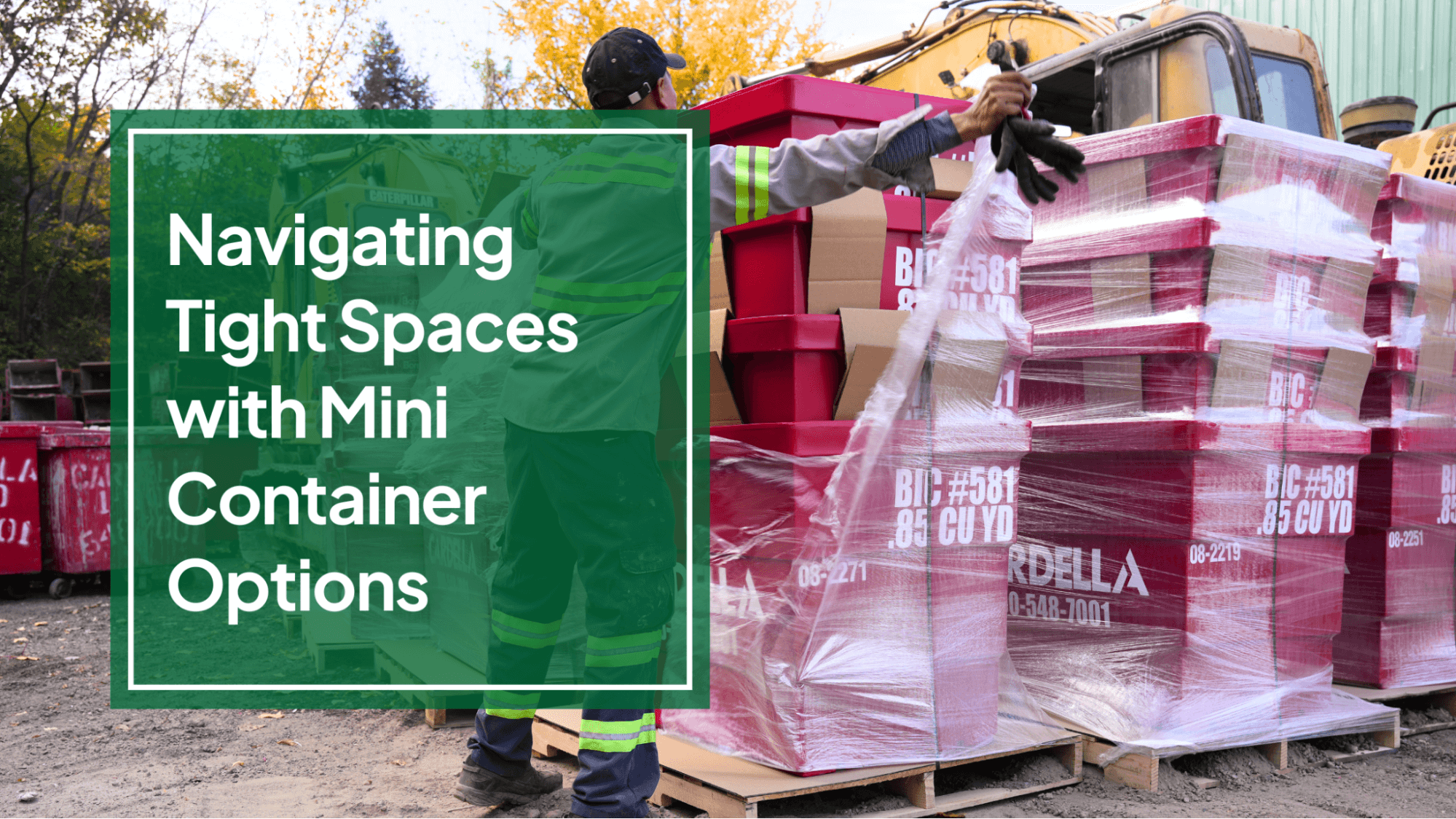
That’s where specialized equipment makes the difference. Our plastic mini containers are specifically designed for interior and finished spaces. They significantly reduce damage to existing drywall and doorframes while still providing adequate capacity for controlled demolition work. Metal mini containers offer similar access benefits for unfinished spaces and are readily available in whatever quantity you need.
The Cardella Advantage: High-Capacity Inventory Meets Real-World Flexibility
Here’s what sets experienced operators apart: we maintain a high-capacity inventory of 10, 20, and 30 cubic yard containers specifically so you’re never stuck waiting or making do with the wrong size.
Same-day service guarantee: When project waste piles up ahead of schedule (and it usually does at some point), we’re ready. Our full fleet of roll-off and packer trucks, operated by highly trained and experienced drivers, means we can respond quickly when your needs change.
Right-sizing expertise: After nearly 80 years in the business and three generations of the Cardella family managing projects across NYC and Northern New Jersey, we’ve seen it all. We work with you to estimate needs based on your specific project type, timeline, and site constraints. Whether it’s a hospital renovation, high-rise construction, or MDU development, we’ve handled similar jobs and can provide guidance based on real data.
Strategic planning for large projects: For major commercial or civil projects, we don’t just drop off a container and hope for the best. We collaborate with your team to establish a waste management plan that accounts for different phases of work, material separation requirements for recycling, and scheduling that keeps debris moving without disrupting operations.
Two TS/MRFs we own and operate: This isn’t just about containers, it’s about the entire waste stream. Our transfer stations and material recovery facilities in North Bergen give us more control over where your materials go and how they’re processed. That means better pricing, reliable service, and higher recycling rates for your project.
The Bottom Line
Choosing the wrong dumpster size is one of those mistakes that seems small until you’re dealing with the consequences. Multiple hauls, project delays, safety issues, and wasted money all stem from a decision that could’ve been made correctly the first time with proper planning and the right partner.
At Cardella Waste Services, we’ve been helping contractors, project managers, and developers get this decision right since 1947. We’re not just dropping off containers, we’re providing the expertise, inventory, and responsiveness that keeps your project moving forward.
Whether you’re managing a residential renovation or a heavy civil project, the right dumpster size is out there. And we’ll help you figure out exactly what that is.
Need help sizing up your next project? Reach out to our team. We’ll walk through your scope, timeline, and site constraints ensuring you’re choosing the right dumpster size for your project—and we’ll be there when you need us, guaranteed.
FAQ: Everything You Need to Know About Choosing the Right Dumpster Size
Selecting the correct container isn’t just a logistical detail—it directly affects your budget, schedule, and job-site efficiency. To help you avoid common pitfalls and build a smarter debris management plan, we’ve compiled answers to the most frequently asked questions about choosing the right dumpster size for construction, demolition, and renovation projects across New York and Northern New Jersey.
How do I know if my project requires multiple dumpster sizes instead of just one?
Many projects—especially renovations, multi-phase builds, and demolitions—produce different types of debris at different stages. Light debris like cardboard and wood may call for a 20-yard container, while heavy materials like concrete or soil require smaller options due to weight limits. We often recommend a combination of dumpster sizes or mini containers so each waste stream is handled efficiently and safely.
Can dumpsters be swapped out or resized mid-project if conditions change?
Absolutely. Most projects evolve, and your dumpster needs will too. If debris volume increases, materials change, or your site conditions shift, we can upsize, downsize, or add containers the same day. Our high-capacity inventory means you’re never stuck waiting for a replacement or additional container.
What’s the best dumpster size for heavy materials like concrete, brick, or soil?
Heavy debris must be placed in smaller containers—typically 10-yard dumpsters—to stay within safe and legal weight limits. Even if you have a large volume, filling a 30-yard container with masonry or concrete makes it too heavy to haul and can even violate DOT regulations. When in doubt, we recommend a smaller container with more frequent swaps.
What should I consider if my project has strict LEED or recycling requirements?
LEED projects benefit from the correct sizing because it supports u003cstrongu003esource separationu003c/strongu003e. Using the right-size container for each waste stream—cardboard, gypsum, metal, and mixed debris—reduces contamination and increases diversion rates. We can help you choose container sizes and provide the documentation you’ll need for compliance and reporting.
How does limited space at my job site affect what dumpster size I should choose?
Space constraints are common in NYC and Northern New Jersey. If you’re working in a tight alley, parking lot, hospital campus, or urban street, a large dumpster may not be feasible. In these cases, smaller roll-offs or mini containers might be the only safe option. Our team evaluates access points, turning radius, overhead clearance, and traffic patterns to recommend a size that fits the site without disrupting operations.