In the dense urban landscape of New York City and parts of New Jersey, construction and renovation projects face a challenge that suburban contractors rarely encounter: there’s simply no room for extras. When you’re working on the 47th floor of a Manhattan high-rise or beneath the city streets on a subway terminal, a standard 20-yard dumpster is just impractical.
That’s where mini containers become more than just a convenience. They’re the difference between a profitable project and one that bleeds money through damaged finishes, delayed timelines, and frustrated property managers.
The Real Cost of the Wrong Container
Here’s a scenario every experienced contractor knows too well: You’re three weeks into an office renovation downtown. The demo is done, finishes are going in, and debris is piling up in the corner. You call for a standard roll-off container, and the crew has to carry all that debris through a finished lobby, scraping freshly painted walls and dropping scraps and dust as they go.
Two hours later, you’re looking at $3,000 in drywall repairs and an angry property manager who’s questioning why you didn’t plan better. The container rental saved you $200. The damage cost you fifteen times that amount. Plus the relationship.
It’s a math problem that doesn’t add up, and it’s entirely avoidable.
When Navigating Tight Spaces with Mini Containers Are the Smart Play
At Cardella Waste Services, we’ve spent decades watching contractors solve problems in tight spaces. After 78 years in the C&D debris business, we’ve learned that the right container isn’t always the biggest one. It’s the one that fits the job without creating new problems.
Here are the situations where navigating tight spaces with mini containers consistently outperform traditional dumpsters:
High-Rise Interior Work
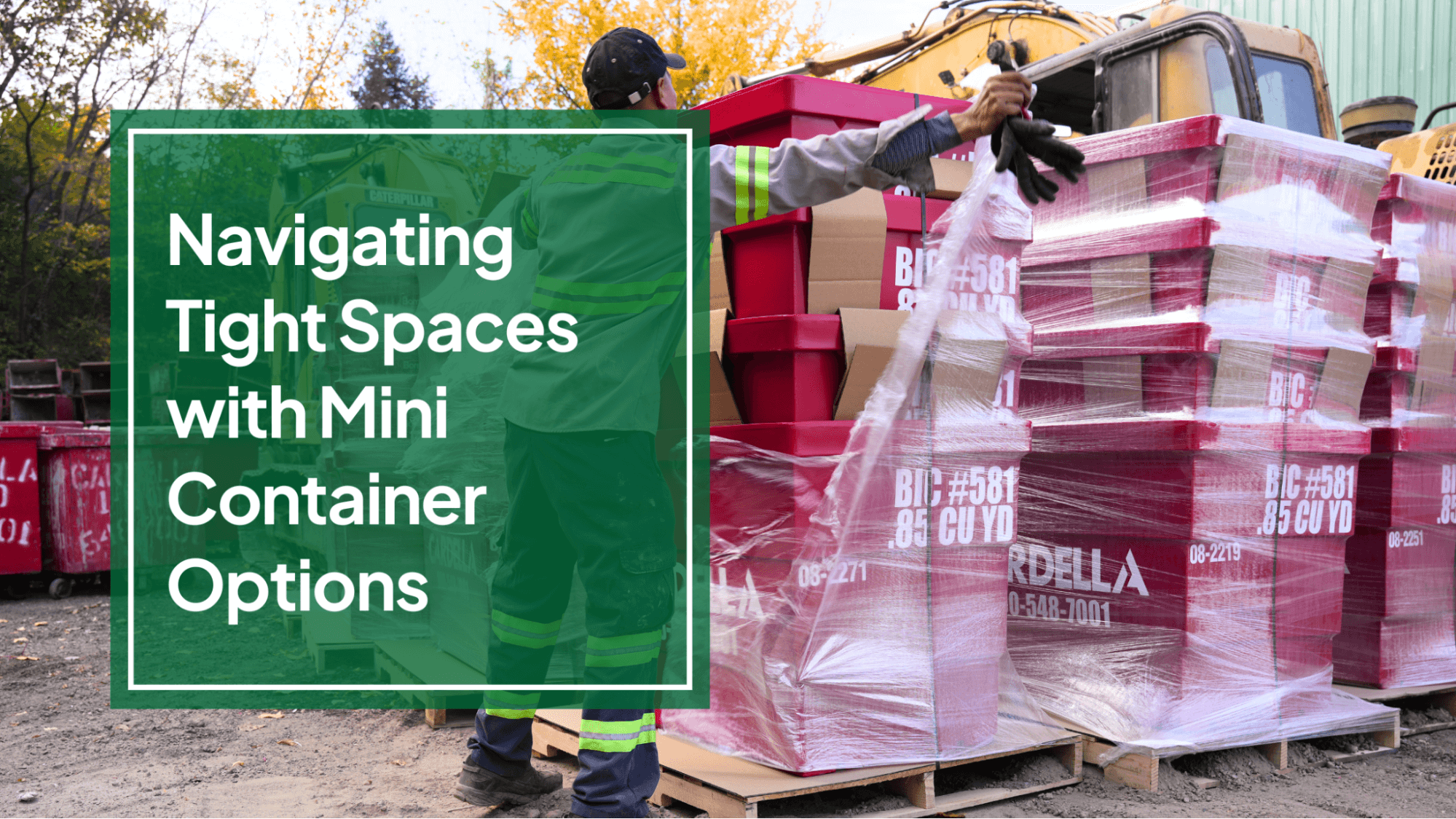
When you’re working above the 10th floor, every piece of equipment that goes up needs to fit in a service elevator or stairwell. Our plastic and metal mini containers are designed with this exact constraint in mind. They’re compact enough to navigate freight elevators and narrow corridors, yet still provide serious capacity for interior demo debris, drywall scraps, and packaging materials.
The plastic mini containers are particularly valuable here. They’re lightweight enough for your crew to reposition without equipment, and the smooth plastic exterior won’t leave black scuff marks on elevator walls or gouge finished surfaces. When you’re working in occupied buildings where tenants are paying premium rents, that protection matters.
Historic Building Renovations
Restoring a historic property in neighborhoods like Tribeca or Jersey City’s Paulus Hook means working within structures that weren’t designed for modern construction equipment. Doorways are narrower. Hallways have intricate millwork. And the street outside may not have much space for traditional containers.
Metal mini containers give you the durability you need for heavy materials like masonry and plaster, while their compact footprint lets you work within the constraints of historic architecture. And the plastic minis ensure you’re not compromising the integrity of irreplaceable 19th-century details just to haul out 20th-century garbage.
Finished Lobby and Common Area Access
Property managers have one job when it comes to construction projects: minimize disruption to tenants and protect the building’s value. When your waste removal strategy tears up a newly renovated lobby, you’ve failed on both counts.
This is where plastic mini containers prove their worth. The smooth, non-marking exterior protects drywall, doorframes, and finished surfaces that would otherwise require costly repairs. We’ve seen contractors save thousands of dollars per project simply by choosing the right container. The plastic construction means no sharp metal edges catching on door frames, no rusty corners leaving marks on painted walls, and no heavy impacts that crack drywall.
For jobs where you’re moving through finished spaces multiple times per day (think high-end residential renovations or work in occupied office buildings), plastic minis are simply the professional choice.
Narrow NYC Streets and Limited Staging Areas
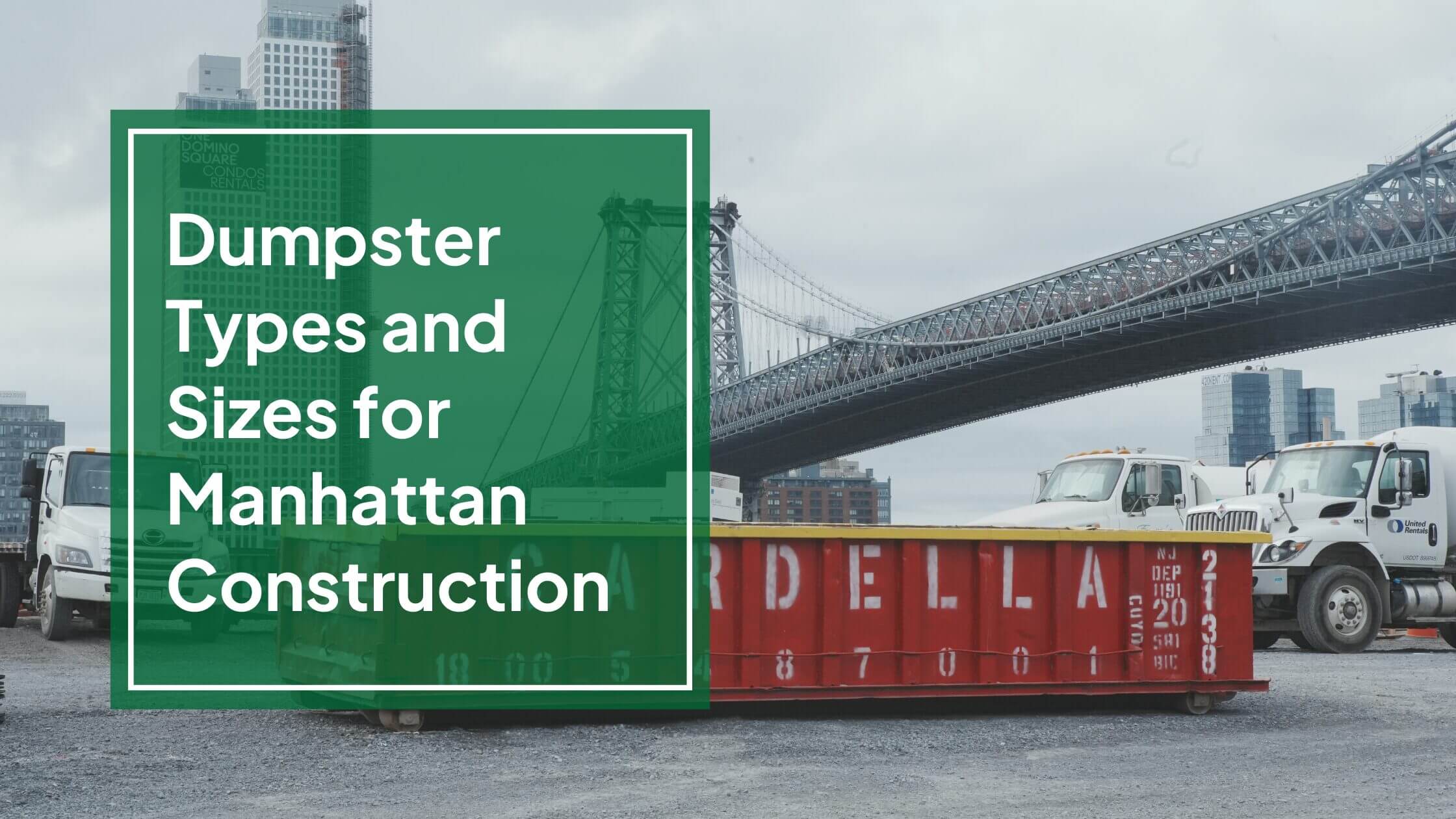
Manhattan wasn’t designed with roll-off dumpsters in mind. Between alternate side parking, delivery trucks, and the general chaos of urban logistics, getting a traditional dumpster into position can be a project in itself. Many streets in older neighborhoods of Brooklyn, Queens, and Jersey City present similar challenges.
Mini containers give you flexibility. They’re easier to place in constrained staging areas, simpler to permit when street space is limited, and faster to swap out when you need frequent pickups due to limited capacity. For projects in densely packed urban cores, this operational efficiency translates directly to cost savings and timeline protection.
Multi-Floor Projects Requiring Source Separation
LEED-certified projects and buildings aiming for high diversion rates sometimes need materials separated at the source. Our 1.9 cubic yard cardboard boxes are purpose-built for this, but mini containers also play a role when you’re staging multiple material streams across different floors of a building.
Rather than mixing everything into one large dumpster and sorting later, you can place different mini containers for different waste streams – one for clean wood, one for metal, one for cardboard, one for gypsum. The result is higher recycling rates and documentation that helps your project hit sustainability targets.
Both our plastic and metal mini containers have their place, and choosing between them comes down to what you’re hauling and where you’re working.
Plastic mini containers excel when:
- You’re moving through finished or occupied spaces
- Surface protection is critical
- You need frequent repositioning by hand
- The job involves tenant-occupied buildings where appearance and cleanliness matter
Metal mini containers are the choice when:
- Durability under rough conditions is the priority
- You’re working in unfinished spaces where surface protection isn’t a concern
- You need frequent repositioning by hand
- You need large volumes of debris moved from tight spaces
For many large projects, the answer isn’t one or the other, it’s both. Use metal minis for heavy demo debris in unfinished areas, and plastic minis when you transition to finish work and occupied zones.
Real NYC Projects, Real Solutions
We work with contractors managing some of the most complex construction projects in the region: hospital renovations where work happens around active patient care, NYC school upgrades during the academic year, high-rise residential towers with strict loading dock schedules, and historic restorations where every architectural detail matters.
In each case, the projects that run smoothest are the ones where waste management strategy matches job site reality. The superintendent who plans container placement based on actual access constraints, material types, and protection requirements is the one who finishes on time and on budget.
Getting the Container Strategy Right
Here’s what we recommend when you’re planning waste management for tight-space urban projects:
Walk the site with removal in mind. Before you order containers, map the path from the work area to the staging location. Measure doorways, hallway widths, and elevator dimensions. Identify finished surfaces that need protection. This 20-minute walkthrough can save you thousands in avoidable damage or delays.
Match container type to space type. If you’re moving through finished lobbies, residential hallways, or occupied office space, plastic minis are worth the planning. If you’re in raw space with a lot of debris, metal minis give you the durability you need without the size constraints of traditional roll-offs.
Plan for frequency over capacity. In tight urban environments, it’s often smarter to schedule more frequent pickups of smaller containers than to try fitting oversized equipment into spaces that aren’t designed for it. Our same-day service guarantee means you won’t get stuck waiting when containers fill ahead of schedule.
Communicate with property management early. Building managers and co-op boards have seen plenty of contractors damage their properties. When you show up with a thought-out waste management plan that includes surface protection and minimized disruption, you’re starting the relationship on the right foot.
The Cardella Difference
We’ve been solving urban waste management problems since 1947, back when our grandfather Mario Cardella started this company with a single truck and a commitment to reliability. Today, we’re still family-owned and operated, and we’re still solving the same fundamental problem: how do you remove construction debris efficiently in some of the most logistically complex environments in the country?
The answer has evolved over nearly eight decades, but the principle hasn’t: you match the equipment to the challenge, not the other way around. And we love a good challenge.
Ready to solve your tight-space waste management challenges? Cardella Waste Services provides plastic mini containers, metal mini containers, traditional roll-offs, and complete C&D debris management throughout NYC and northern New Jersey. With same-day service and 78 years of urban construction experience, we understand what it takes to keep your project moving.
Call us to discuss your specific project requirements.
FAQ: Navigating Tight Spaces with Mini Containers
Working in New York City means dealing with tight corridors, narrow streets, finished lobbies, service elevators, and restricted staging areas. For many contractors, the challenge isn’t hauling debris—it’s getting containers where they need to go without damaging the building or slowing down the project. That’s why Mini Containers have become the go-to solution for navigating tight spaces, protecting finishes, and keeping workflows efficient. The FAQs below address the most common questions contractors have when deciding whether mini containers or traditional dumpsters make the most sense for their urban job sites.
When should I choose Mini Containers instead of a traditional dumpster?
Mini Containers are the better choice any time your project involves tight access points—finished lobbies, freight elevators, narrow hallways, limited loading dock schedules, or dense NYC streets. If debris must travel through occupied or finished areas, mini containers prevent costly damage and allow crews to work efficiently without waiting on oversized equipment.
How do Mini Containers help when navigating tight spaces in NYC buildings?
Mini Containers are specifically designed for u003cstrongu003enavigating tight spaces with mini containersu003c/strongu003e such as service elevators, stairwells, historic corridors, and high-rise interiors. Their compact design, smooth edges, and maneuverability allow crews to move debris from upper floors to staging areas without scraping walls, damaging doorframes, or blocking tenant pathways.
What’s the difference between plastic Mini Containers and metal Mini Containers?
u003cstrongu003ePlastic Mini Containersu003c/strongu003e are ideal for finished or occupied spaces because they won’t leave scuffs, dents, or marks on walls and elevator interiors. They’re lightweight and easy for crews to reposition by hand.u003cbru003eu003cstrongu003eMetal Mini Containersu003c/strongu003e are best for heavy debris—masonry, plaster, framing, and demo materials—especially in unfinished areas where durability matters more than surface protection. Most large projects use a mix of both as they move from demolition to finish work.
Can Mini Containers support source separation for LEED or high-diversion projects?
Yes. Mini Containers make it easy to stage multiple waste streams across different floors—clean wood, metal, cardboard, gypsum, or mixed debris—for higher recycling rates and accurate reporting. This reduces contamination, improves sustainability performance, and ensures you meet LEED documentation or project diversion requirements.
How often do Mini Containers need to be emptied on urban job sites?
Urban projects typically rely on u003cstrongu003efrequency over capacityu003c/strongu003e. Since Mini Containers fill faster, they’re usually serviced more often—but their advantage is that they u003cemu003efitu003c/emu003e where traditional dumpsters cannot. With Cardella’s same-day service, you can schedule frequent swaps without disrupting workflow, which keeps debris moving even when staging space is extremely limited.