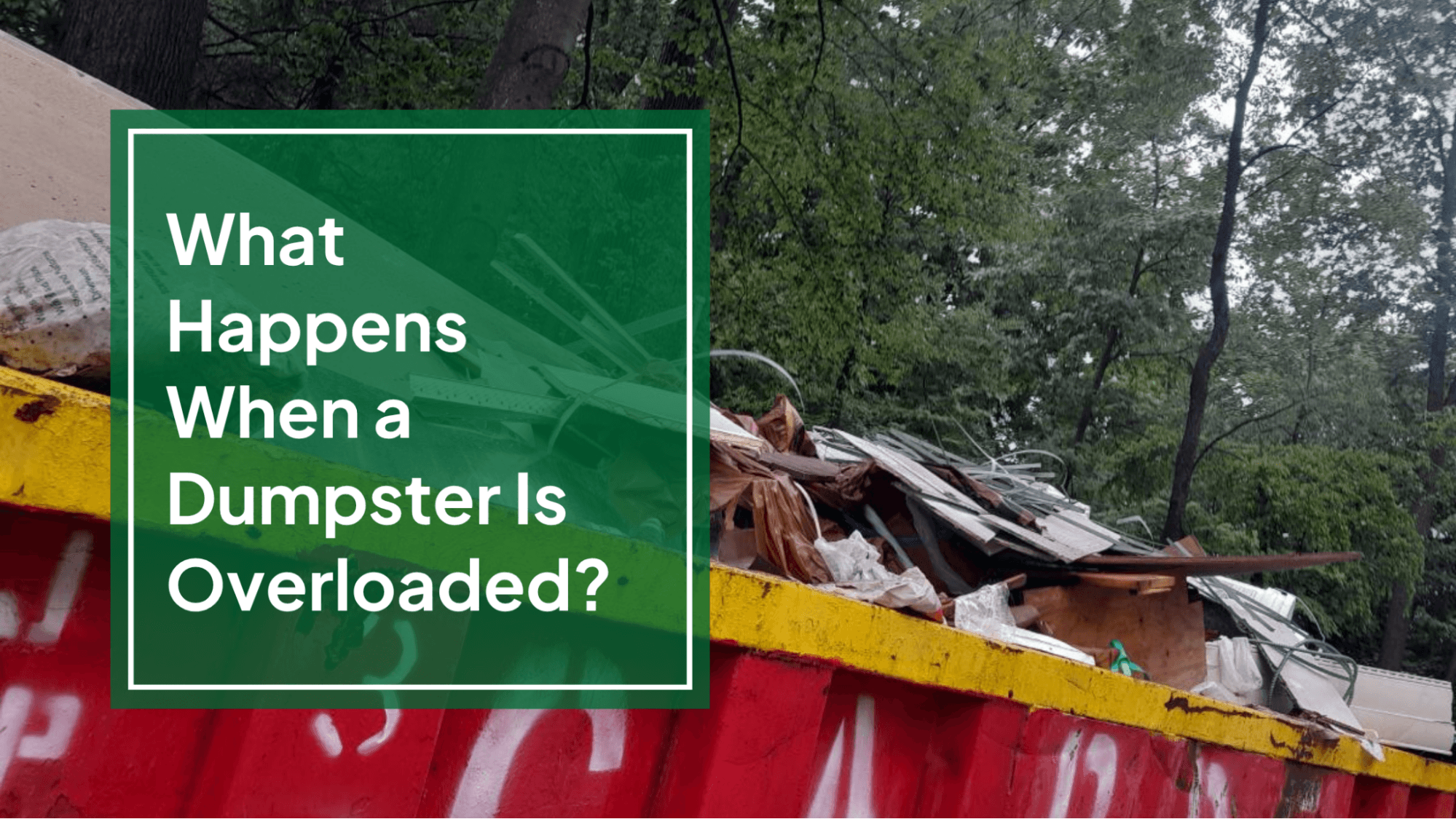
What Happens When a Dumpster Is Overloaded?
On a busy construction site, it is easy to treat a dumpster like one more thing that simply needs to get filled and hauled away. But how a container is…
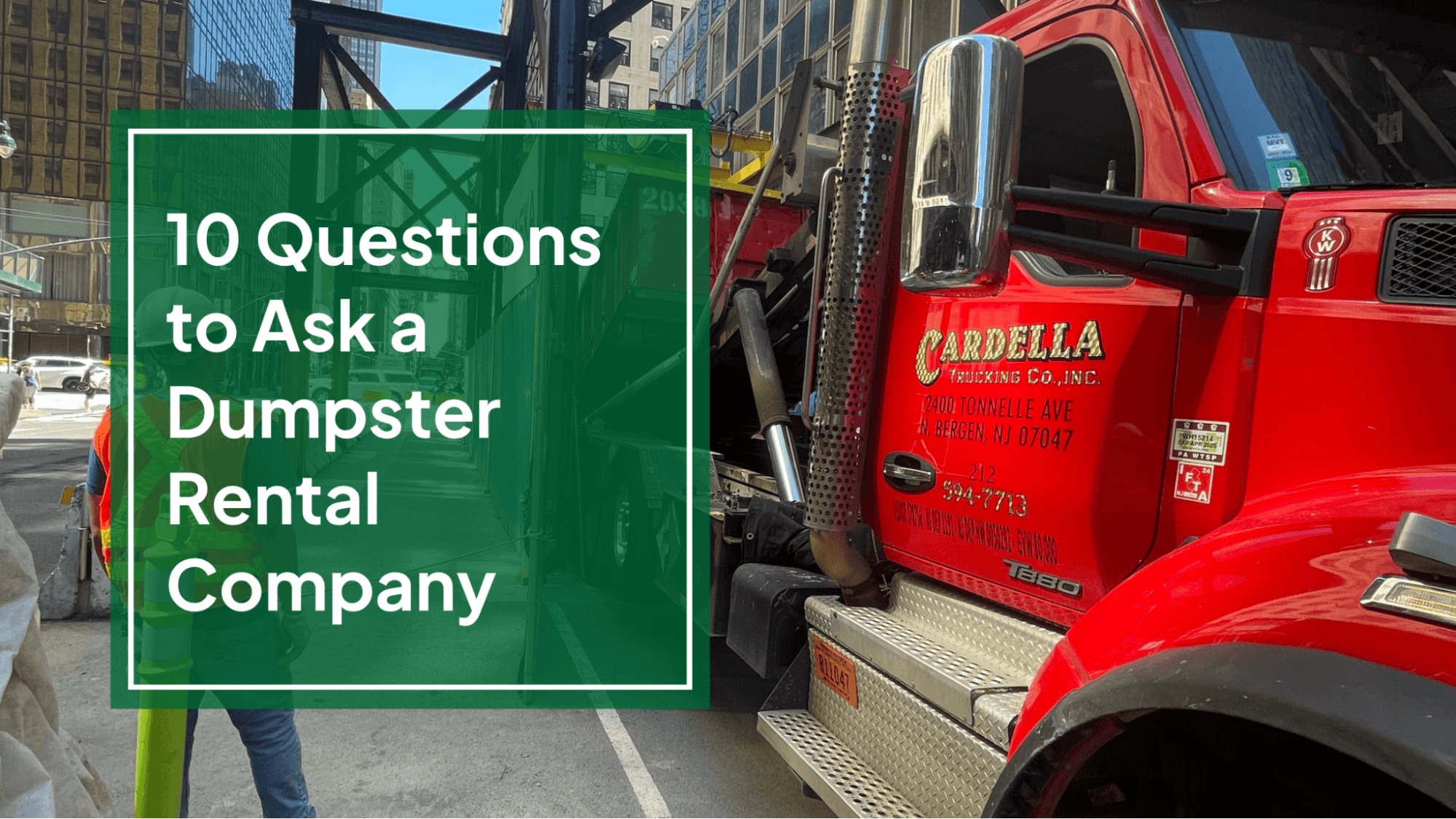
Choosing a dumpster company sounds straightforward until a missed pickup brings work to a halt, an overweight container produces an unexpected charge, or you discover that nobody pulled the required street permit.
For contractors, waste removal isn’t a minor administrative detail. It affects site access, labor productivity, safety, scheduling, compliance, and ultimately, the profitability of the job.
That means the lowest dumpster price is not always the lowest-cost option.
Whether you’re comparing providers for one project or looking for a long-term construction dumpster provider in NJ or NYC, these ten questions will help you evaluate more than the number at the bottom of the quote.
Some dumpster rental companies own their containers but outsource transportation. Others act primarily as brokers, taking the order and passing it to a third-party hauler.
That arrangement isn’t automatically a problem, but contractors should know who is ultimately responsible for delivering and removing the container.
Ask:
A company that controls its own fleet has greater visibility into truck locations, driver availability, and service schedules. When conditions change (and on a construction site, they usually do), you want to speak with someone who can take action, not someone waiting for an update from another company.
Permit requirements depend on where the dumpster will be placed.
A container sitting entirely on private property may not require the same approvals as one occupying a public street, parking lane, or sidewalk-adjacent area. Requirements can also vary considerably between New York City and individual New Jersey municipalities.
Before scheduling delivery, ask:
In NYC, an experienced local provider should be able to explain the applicable street-permit process and clarify what it will handle. In New Jersey, permits are often handled by the customer and requirements vary by municipality.
Never assume the permit is included simply because a company agreed to deliver the dumpster. Confirm responsibilities in writing before the truck arrives.
Dumpster size and dumpster weight are two different things.
A large container may have plenty of physical space left while already approaching its legal or priced weight limit. This is especially important when disposing of dense materials such as:
Ask the provider:
For heavy debris, a smaller container may be the safer and more economical option. A knowledgeable provider should recommend a container based on both the volume and type of material, not simply send the largest dumpster available.
Contractors rarely need a dumpster only once. Active projects may require repeated removals, replacements, or “dump and return” service.
Ask each company to define its normal turnaround time:
A vague answer such as “we’ll get there as soon as possible” should prompt more questions.
A full dumpster can occupy valuable staging space, block access, create safety problems, or leave workers with nowhere to place debris. When comparing companies, consider the potential cost of having a crew waiting on a container, not just the rental rate.
Same-day service can make the difference between maintaining momentum and losing an entire shift.
It may be needed when:
Ask whether same-day service is actually available in your project area, what the request deadline is, and whether additional charges apply.
It is also worth asking how frequently the company fulfills same-day requests. “Same-day service available” means very little if the provider rarely has the trucks, containers, or disposal capacity to deliver it.
The best dumpster rental company for an NYC contractor is often the one that can respond when the original plan stops matching what is happening on the site.
A low initial quote can become expensive after fuel surcharges, overweight charges, rental fees, permit costs, failed-service charges, and disposal fees are added.
Before selecting a provider, request a written breakdown of every potential charge, including:
Also ask what circumstances could cause the final invoice to differ from the quote.
Transparent pricing does not necessarily mean one flat rate for every situation. Construction disposal has real variables. The goal is to understand those variables before the job begins instead of after the invoice arrives.
A provider that performs well on one small job may not have the fleet, container inventory, or dispatch capacity to support several active sites.
If your company manages multiple projects, ask:
This becomes especially important for general contractors and subcontractors operating across New York City and Northern New Jersey. You should not have to start from scratch with a different hauling company every time a new project crosses a municipal boundary.
A dependable construction dumpster provider in NJ and NYC should be able to scale with your project volume while keeping service, billing, and communication organized.
Waste reports are useful even when a project is not pursuing a specific sustainability certification.
Accurate documentation can help contractors:
Ask what documentation is available and how you will receive it.
Useful records may include:
Contractors should also ask whether reports are emailed manually or available through an online customer portal. Easy access becomes increasingly valuable when several project managers, estimators, accounting employees, and sustainability professionals need the same information.
A general promise that debris will be “recycled whenever possible” is not the same as documented diversion reporting.
Ask:
This is especially important when the owner, general contractor, municipality, or sustainability team has established waste-management requirements.
The provider should also be honest about what it can document. A credible company will explain how the material is processed, what records are produced, and where the limitations are. It should not promise a recycling percentage simply because that is the number a project wants to hear.
Construction schedules move. Deliveries get delayed. Demolition gets accelerated. Streets become inaccessible. Cranes occupy staging areas. Supers request that containers be moved with little notice.
Your dumpster provider’s change process should be clear before you need to use it.
Ask:
Look for a provider with clear communication between customer service, dispatch, and drivers. Technology such as GPS tracking, text updates, online ordering, and digital service records can help—but only when it is supported by people who understand construction sites.
Before awarding the work, make sure you can answer each of these questions:
Price belongs on the checklist, but it should not be the entire checklist.
The right provider helps keep debris moving without creating more work for your project team. It has the equipment, local knowledge, reporting systems, and service capacity to respond when the job does not go exactly as planned.
Cardella Waste Services provides construction and demolition debris removal throughout New York City and Northern New Jersey. With an experienced local team, company-operated trucks, two Bergen County processing facilities, online account access, transparent reporting, and a same-day service guarantee, Cardella helps contractors keep projects moving.
Ready to work with a local construction waste expert? Request a custom quote or order your dumpster online today.