What Happens When a Dumpster Is Overloaded?
On a busy construction site, it is easy to treat a dumpster like one more thing that simply needs to get filled and hauled away. But how a container is…
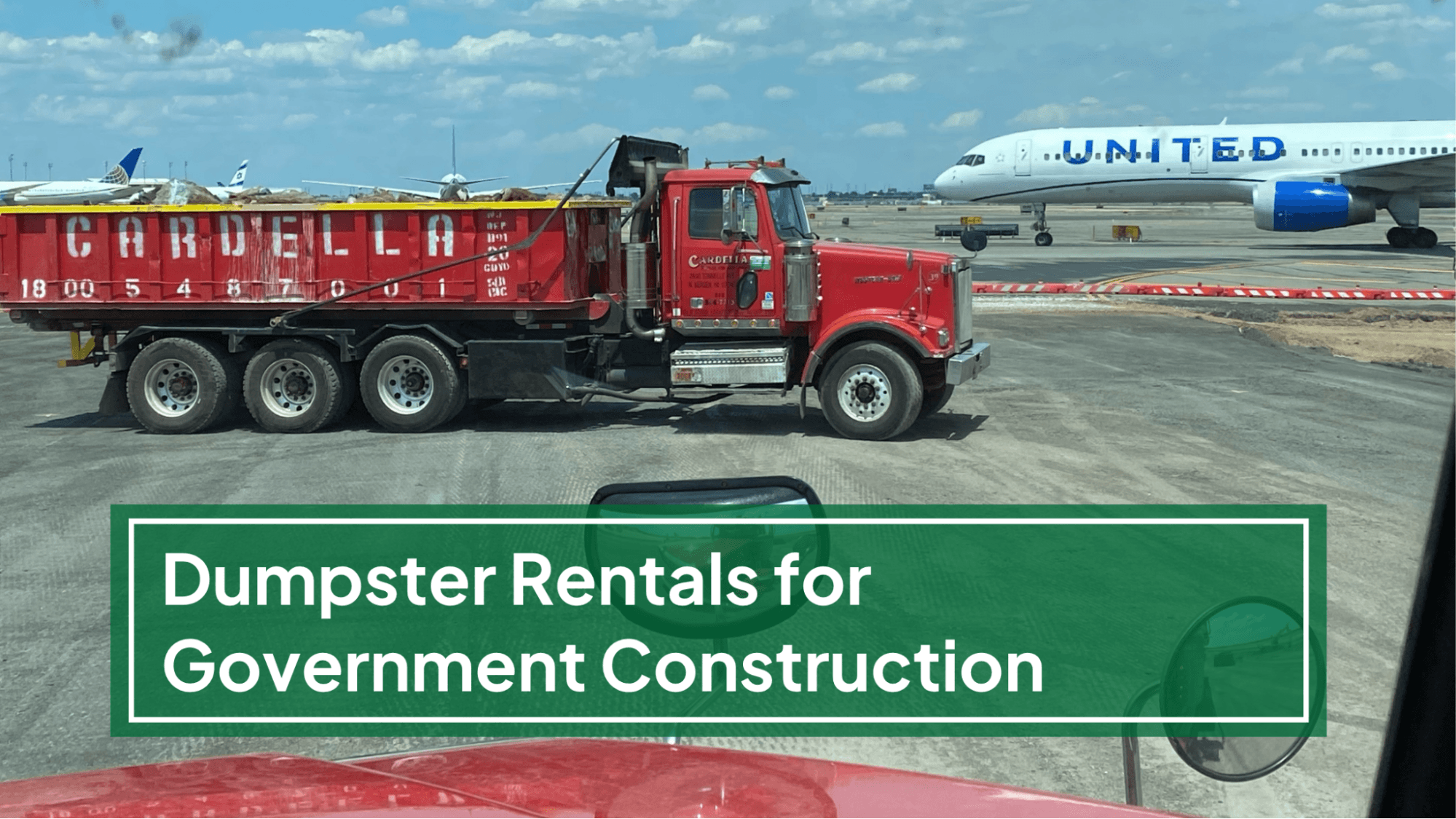
Government construction projects rarely leave room for “we’ll figure it out later.”
Whether you are working on a municipal building renovation, public school improvement, transportation project, utility upgrade, or other public works contract, waste removal may be only one part of the job but it can quickly affect the entire schedule.
A missed pickup can block a staging area. An incomplete weight ticket can create a documentation gap. A hauling company without the right local experience can leave your team scrambling to resolve permits, access restrictions, or reporting requirements.
That is why choosing a government construction dumpster rental in NYC or a municipal construction waste provider in NJ requires more than comparing container prices. Contractors need a waste partner capable of supporting the project’s compliance requirements, site logistics, reporting expectations, and construction schedule.
Here is what to consider when arranging dumpster service for a government construction project.
Public-sector projects often require a more complete paper trail than private construction jobs. The exact requirements will depend on the contract, funding source, agency, municipality, and type of debris generated.
Before the project begins, review the specifications to determine what waste documentation must be maintained or submitted. This may include:
The contractor, project owner, construction manager, sustainability consultant, or government agency may also require reports in a particular format or on a specific schedule.
An experienced public works dumpster service should be able to explain what information it can provide and how contractors can retrieve it. That conversation should happen before the first container arrives, not when a closeout package is already due.
Ask prospective providers:
Clear answers at the beginning can prevent weeks of document chasing at the end of the project.
Many public projects establish sustainability goals or require contractors to document how construction and demolition debris was handled.
Depending on the project, contractors may need to report:
These reports are only as reliable as the underlying data. If waste tickets are incomplete, project names are entered inconsistently, or multiple jobs are combined under one account, producing an accurate final report can become difficult.
Before selecting a municipal construction waste provider in NJ or New York City, ask how the company tracks material from pickup through processing. Confirm whether it operates its own permitted facilities or relies on third parties, how weight information is captured, and what recycling documentation is available.
Cardella Waste Services operates two construction and demolition transfer and material recovery facilities in Bergen County. Customers can also use CardellaConnect to access orders, billing information, and project reporting, including available recycling and LEED documentation.
Not every public project follows LEED requirements, but the same reporting capabilities can help contractors support agency sustainability goals and project-specific waste management plans.
It is also important to separate contractual requirements from assumptions. Diversion standards, acceptable calculation methods, and documentation formats can vary. Contractors should confirm the current requirements with the government agency, construction manager, or project sustainability team before work begins.
Public construction schedules can be complicated by restricted work hours, agency inspections, traffic plans, community considerations, security procedures, and phased access to the site.
Waste removal should be incorporated into that schedule from the start.
Your provider may need to coordinate around:
The best service plan is based on how the project actually operates. A site with little storage space may need frequent swaps. Interior demolition may require mini containers or boxes that can move through service elevators. Heavy debris may require smaller roll-offs to help manage load weight. A large infrastructure project may need several containers onsite at once, with different waste streams assigned to specific areas.
Contractors should discuss anticipated debris volume, peak production periods, container sizes, placement locations, and pickup frequency before mobilization.
The plan should also include a process for handling changes. Government construction schedules move. Inspections are delayed. Crews work out of sequence. Demolition produces more material than expected. A reliable waste partner needs the fleet, dispatch capabilities, and local knowledge to respond when the original schedule no longer matches conditions in the field.
Government facilities and infrastructure sites may have more controlled access than standard commercial jobs. Drivers can encounter checkpoints, credential requirements, designated entrances, vehicle inspections, escorts, or restrictions on where they may travel within the site.
Before service begins, provide the dumpster company with complete access instructions, including:
If possible, arrange a site walk before the first delivery. Photos, marked-up logistics plans, and written instructions can also help dispatchers and drivers understand the location.
Government jobs often involve multiple contractors, staging areas, and layers of supervision. A clearly identified onsite contact can prevent a driver from being redirected by someone unfamiliar with the approved waste plan.
Security procedures also affect timing. A pickup that normally takes a few minutes may take longer when a driver must pass through an inspection or wait for an escort. Those details should be included when establishing service windows and planning around other site activity.
Dumpster permit requirements vary by jurisdiction and placement location. Containers placed on private property may be treated differently from those occupying a public street, sidewalk, or right-of-way.
For work in New York City, contractors should confirm whether street-use permits, traffic controls, or other approvals are required for the proposed placement. Cardella handles NYC street permits for its dumpster placements when applicable.
In New Jersey, dumpster permit requirements are generally determined by the individual municipality, and the customer is typically responsible for obtaining the necessary approval.
Because government projects may involve additional agency coordination, contractors should confirm:
Do not assume that the waste company, general contractor, government agency, or subcontractor is handling the permit. Put responsibility in writing before scheduling delivery.
Government projects can last months or years. They may involve several work zones, multiple prime contractors, changing debris streams, and sudden increases in service demand.
A low introductory price means little if the provider cannot supply enough containers or complete pickups when the job reaches peak production.
Ask whether the company can support:
It is also worth asking who owns the trucks, containers, and processing facilities involved in the work. A broker may be able to arrange service, but each additional third party can make scheduling, troubleshooting, and documentation more complicated.
A provider with its own fleet, dispatch team, containers, and local facilities has greater direct control over the service contractors receive.
A full dumpster is not just an inconvenience. It can become a safety, productivity, and scheduling problem.
When containers are not removed on time:
Those disruptions can be especially consequential on public projects, where contractors may be working under strict completion dates, daily reporting requirements, liquidated-damages provisions, or commitments to keep facilities and surrounding communities operational.
Reliable service begins with realistic scheduling, but responsiveness matters too. Contractors should understand how the provider handles urgent requests, missed service windows, weather disruptions, mechanical problems, and last-minute changes.
Cardella offers a same-day service guarantee and has experience supporting large, logistically complex construction and infrastructure projects throughout New York City and Northern New Jersey. With an in-house fleet, local dispatch team, and two Bergen County facilities, Cardella can respond directly when project conditions change.
Before selecting a dumpster company for a municipal, state, or federal project, ask:
The answers will help you evaluate more than price. They will show whether the provider has the operational capacity and documentation systems to support the job from mobilization through closeout.
Public-sector construction creates additional layers of coordination, but waste removal does not have to become another administrative burden.
The right provider will help your team plan container service, maintain a reliable documentation trail, coordinate with site restrictions, track recycling activity, and adjust as the project changes.
Cardella Waste Services provides construction dumpster rentals and debris-management support for contractors working throughout New York City and Northern New Jersey. Our team combines more than 70 years of local experience with an in-house fleet, two Bergen County facilities, same-day service capabilities, and transparent customer reporting.
Request a quote for your government project and learn how we simplify construction waste compliance.